ABOUT US

Redefining Software for the Future
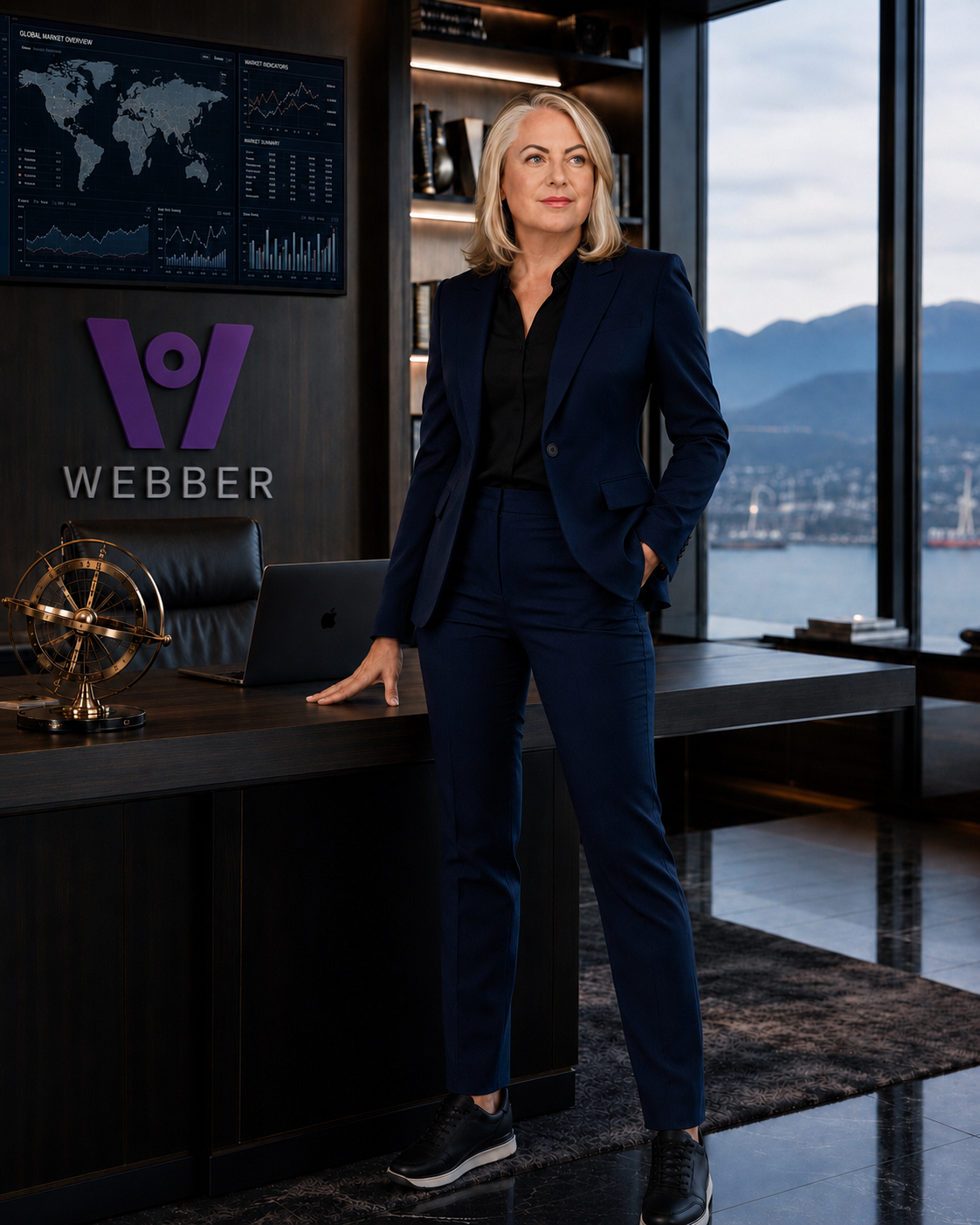
Founder and Global CEO
Executive Leadership
Rachael Babcock is the Founder and Global CEO of Webber and Cognita. Over more than 25 years, she has led revenue growth, engineering, enterprise transformation, strategic partnerships, and international expansion across startups, mid-sized enterprises, Fortune 500 companies, and public-sector-adjacent organizations in North America and EMEA.Her executive advantage is systems architecture: seeing the whole operating model, identifying the leverage points that determine performance, and aligning information, incentives, and authority around measurable outcomes. She leads with full commercial and operating accountability, setting direction across product, revenue, growth, engineering, transformation, partnerships, international expansion, and delivery. She does not advise from the edge of the system. She holds the direction, the decision rights, and the outcome.
Webber
Webber is the company through which this executive direction becomes scalable enterprise value. It develops Human-Centered Sovereign Systems for high-stakes decision environments where decision quality, operational reliability, and accountability have direct commercial and operational consequence.Through Coherent Systems Design, Webber turns structural insight into proprietary products, repeatable operating models, defensible intellectual property, and measurable business performance. It is building a portfolio of Sovereign Systems designed to solve high-cost structural problems, strengthen market position, and optimize human agency as intelligent automation becomes more powerful.
Culture: Webber’s Operating Model

Information
Information enables perception. Signals must move clearly across the organization so users can see what is happening, understand what matters, and act before friction becomes force.

Incentives
Incentives shape behavior. We align incentives so individual actions reinforce the outcomes the system is meant to produce. When incentives are coherent, effort supports the system instead of compensating for it.

Authority
Authority enables accountable action. Decision authority belongs close to the signals, so the rightful human operator can act with clarity, responsibility, and accountability.
History

Origins
The Webber story begins with lineage — and a standard.During World War II, Florence Webber, Rachael’s maternal grandmother, built ships in the Boston shipyards: precision work under pressure, where structure mattered and craft had consequence. She later earned a master’s degree and dedicated her life to teaching children with special needs. Quietly formidable and endlessly persistent, she embodied what Webber still values: craft and care, strength and grace, beauty and boundaries.
That heritage shaped an early systems instinct. From childhood onward, Rachael was drawn to environments where real systems were visible in motion: farms, mechanical shops, fabrication bays, and logging operations. Rather than focusing on individual tools or machines, she became fascinated with how entire operations worked together — how materials, judgment, and consequence moved through a system from beginning to end.
Worldview
Across industries, cultures, and functions, Rachael reached a governing conclusion: healthy systems do not hold through force. In business, force appears as rising cost, excess process, missed targets, fragmented accountability, and teams working harder against structural misalignment. The natural world demonstrates a more durable logic: signal, timing, boundary, reciprocity, adaptation, and flow.That became the worldview behind Webber. Rachael became less interested in forcing human systems to perform and more interested in reading the information, incentives, and authority already present in them — acting at leverage points, strengthening structure, and designing systems that improve performance, enable durable growth, and optimize human agency.

Worldview
Across industries, cultures, and functions, Rachael reached a governing conclusion: healthy systems do not hold through force. In business, force appears as rising cost, excess process, missed targets, fragmented accountability, and teams working harder against structural misalignment. The natural world demonstrates a more durable logic: signal, timing, boundary, reciprocity, adaptation, and flow.That became the worldview behind Webber. Rachael became less interested in forcing human systems to perform and more interested in reading the information, incentives, and authority already present in them — acting at leverage points, strengthening structure, and designing systems that improve performance, enable durable growth, and optimize human agency.
Leadership
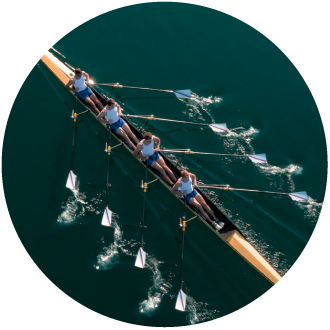
Today, Rachael’s work focuses on the structural questions that determine how systems perform: Where are signals distorted, delayed, or misaligned? Where is authority separated from accountability? Where is force compensating for structural failure? Where is the leverage point that can shift how the system behaves? Where can potential resolve into precise action? How can the system optimize human agency under complexity? This is the work of Coherent Systems Design: designing from signal, not force.
Webber
Webber emerged from this orientation. As technology becomes more powerful, systems must be designed to serve human judgment rather than absorb it into opaque platforms, misaligned structures, or unnecessary force. Webber’s purpose is to make the principles of coherent systems visible, repeatable, and operational through products that align information, incentives, and authority. When structure is coherent, intelligent automation can remain governed, evidence-based, operator-visible, and accountable. Webber is building toward a future where complex operational systems become Human-Centered Sovereign Systems — trusted, life-aligned, and designed to optimize human agency.
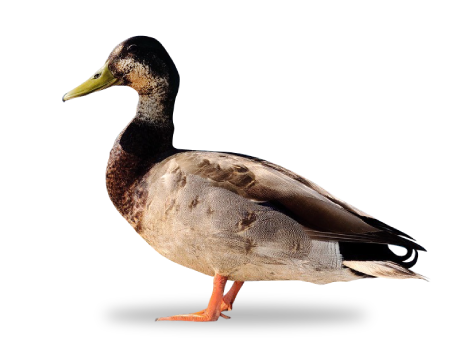
The Mallard
Graceful flow requires structure.
The Mallard
Graceful flow requires structure.
Webber
Webber emerged from this orientation. As technology becomes more powerful, systems must be designed to serve human judgment rather than absorb it into opaque platforms, misaligned structures, or unnecessary force. Webber’s purpose is to make the principles of coherent systems visible, repeatable, and operational through products that align information, incentives, and authority. When structure is coherent, intelligent automation can remain governed, evidence-based, operator-visible, and accountable. Webber is building toward a future where complex operational systems become Human-Centered Sovereign Systems — trusted, life-aligned, and designed to optimize human agency.

Systems Design & Portfolio
Webber is a modern software company that designs and owns a portfolio of Human-Centered Sovereign Systems for high-stakes decision environments. Built through Coherent Systems Design, Webber designs from signal, not force.


Systems Engineering
Cognita delivers Secure Governed Engineering for complex operational systems. Cognita empowers Webber and other clients to move from architecture to operational reality through secure cloud engineering, automation, integration, data governance, and operational reliability.
Sister Companies

Webber and Cognita operate as sister companies built around the same systems philosophy. Webber designs Sovereign Systems. Cognita makes them operational. Together, they align design, architecture, and engineering so complex operational systems can become Human-Centered Sovereign Systems — clear, reliable, trusted, and designed to optimize human agency.